
AI & Automation
From FAQ Bots to Real AI Assistants Built for Production
Why most FAQ chatbots fail and what production-ready AI assistants do differently
Most website chatbots fail for a simple reason. They are not AI assistants. They are FAQ bots with a chat interface.
This became clear while building a chatbot for a client who needed something reliable on a live website, not a demo. Before writing a single line of workflow logic, everything started on paper. The first step was defining what the assistant should and should not do, what information it was allowed to access, and how it should behave when it did not know the answer.
Only after the concept was clear did the implementation begin.
Mindmaps and Workflow
Paper first, then workflow. Here is the system at a glance.
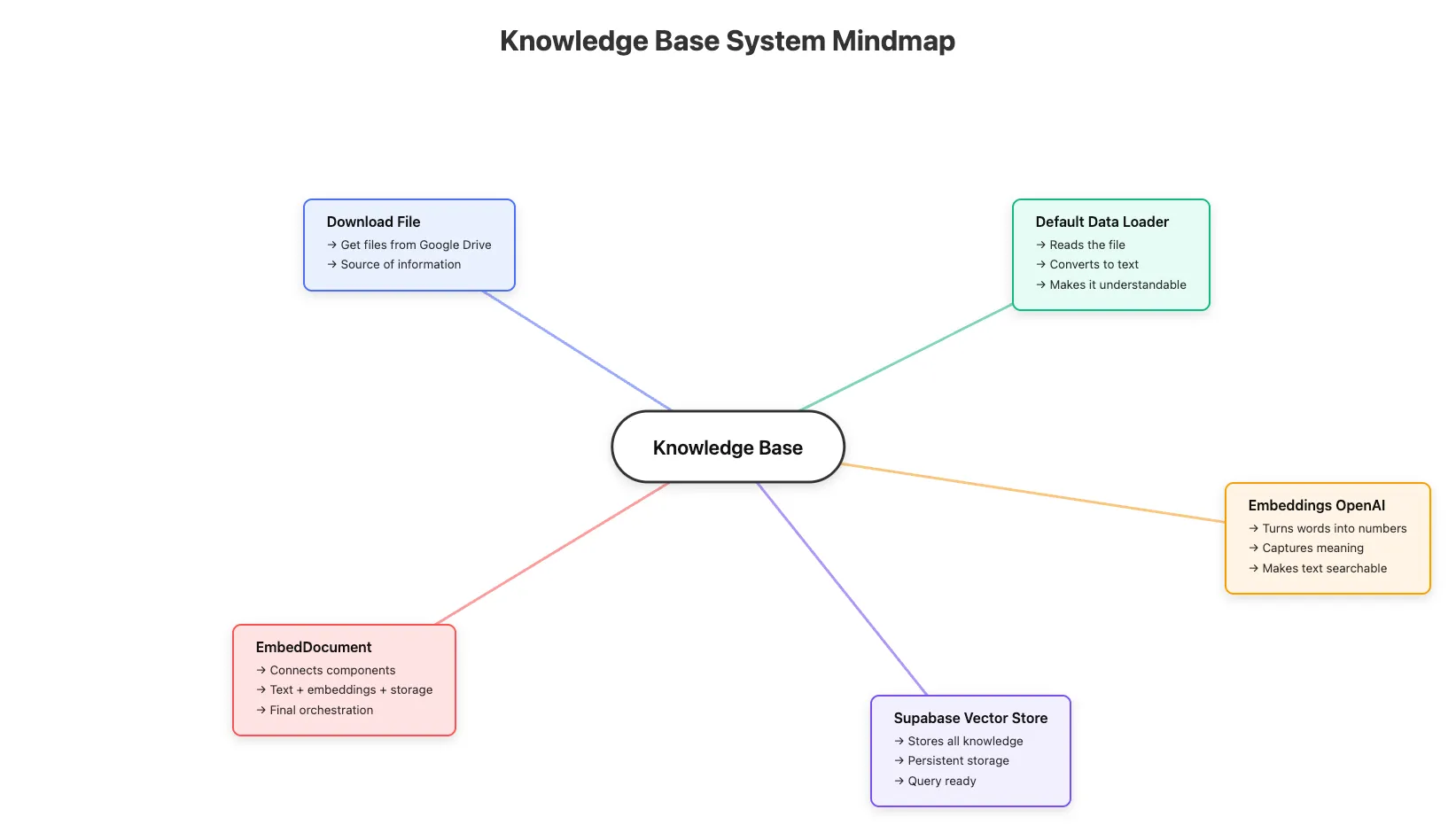
Knowledge Base Mindmap - Click to enlarge
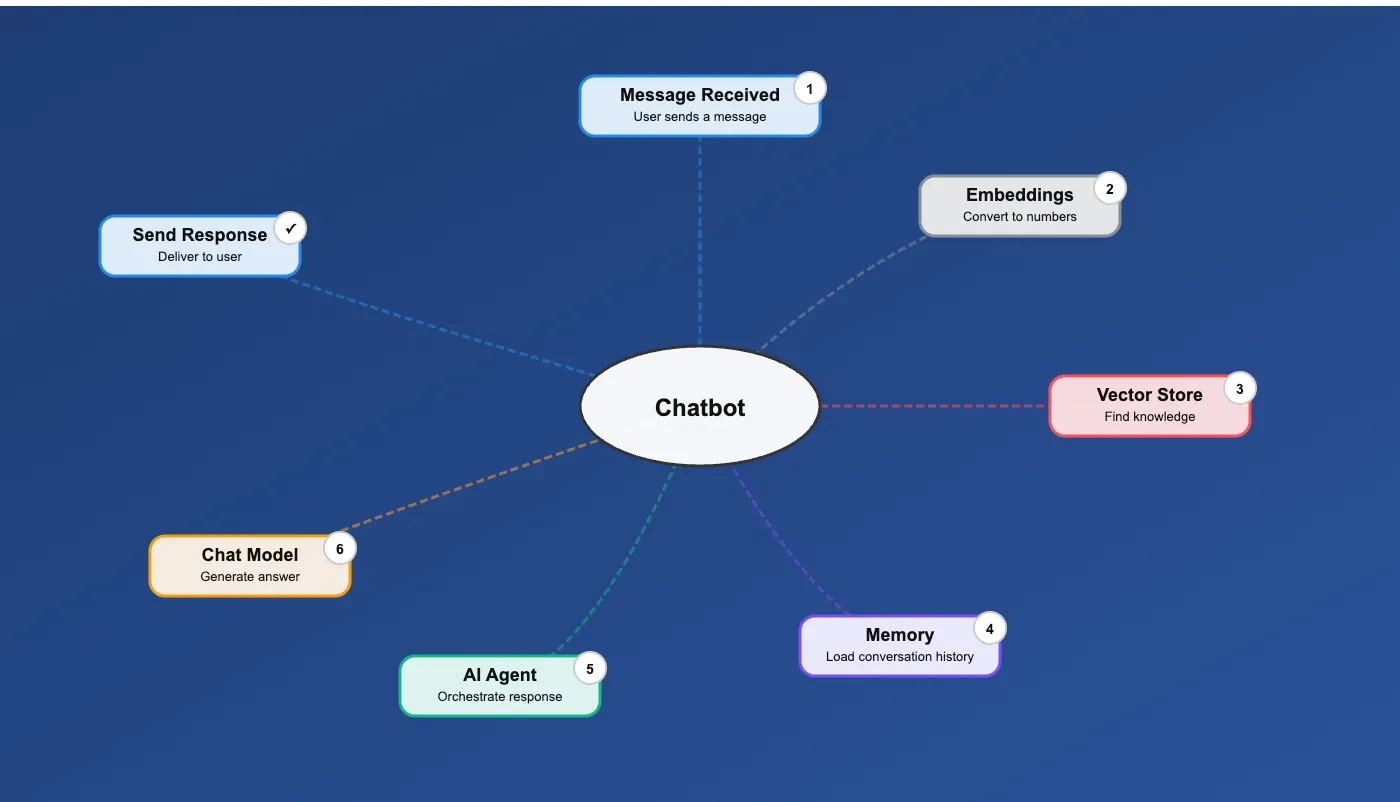
Chatbot Mindmap - Click to enlarge
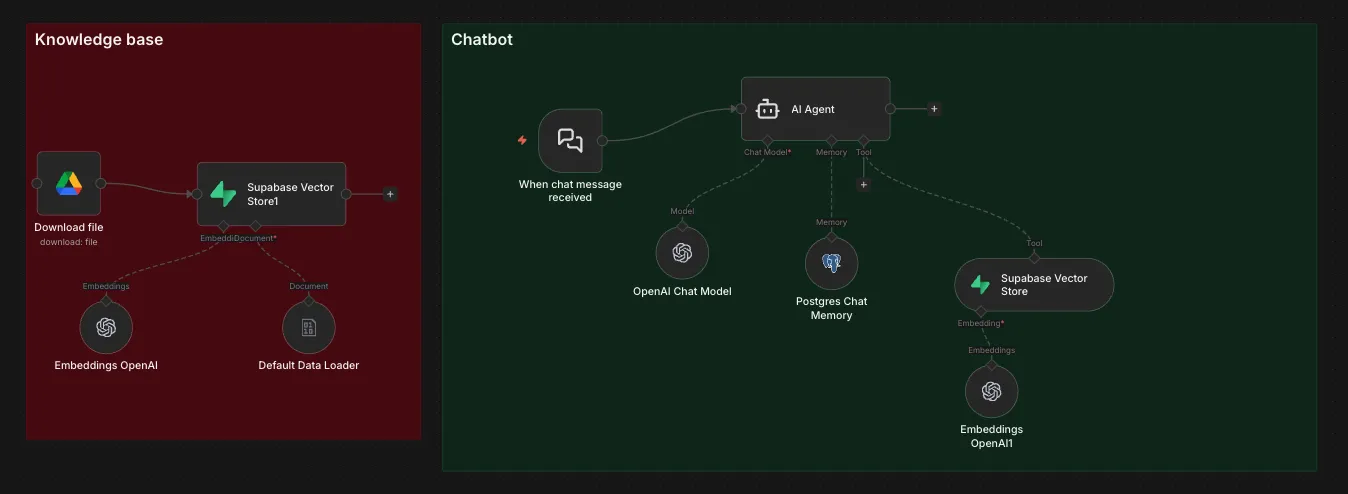
n8n Workflow Overview - Click to enlarge
An FAQ bot is built around predefined answers and keyword matching. That approach is quick to ship but fragile. As soon as users ask nuanced questions or phrase things differently, accuracy drops and trust follows.
A real AI assistant is designed as a system. Knowledge is separated from conversation logic. Content lives outside the prompt and is retrieved only when required. The assistant knows when to search for information and when to respond without touching the knowledge base at all. This is what keeps answers grounded and predictable.
For this client build, the workflow was designed only after the behavior was mapped. Documents were ingested, structured, and stored in a way that allowed controlled retrieval. The chat logic was then layered on top, with clear rules for greetings, product questions, and fallback responses. The result was an assistant that behaves consistently even as content changes.
This approach also makes the system easier to maintain. Updating content does not require rewriting prompts or retraining behavior. The assistant simply reflects the latest approved information.
Prompt-only chatbots try to sound intelligent. System-based assistants are designed to be correct. On a live website, correctness matters more than cleverness.
FAQ bots are easy to launch. Real AI assistants are planned on paper first, then built as workflows. That difference is what allows them to work in production. The same principle now applies to the next step beyond assistants: AI agents that take action across your stack.
Frequently Asked Questions
What is the difference between an FAQ bot and a real AI assistant?
An FAQ bot relies on predefined answers and keyword matching. A real AI assistant is designed as a system with separate knowledge retrieval and conversation logic, making it more flexible and accurate.
Why do most website chatbots fail?
Most chatbots fail because they are FAQ bots disguised as AI. They break when users phrase questions differently or ask nuanced questions outside the predefined responses.
What tools are used to build production-ready AI assistants?
Production-ready AI assistants typically use workflow automation tools like n8n, vector databases for knowledge storage, and structured retrieval-augmented generation (RAG) architectures.
How do you update an AI assistant without breaking it?
By separating knowledge from conversation logic. Content updates happen in the knowledge base, not the prompt or workflow. This means the assistant reflects the latest information without rewrites.