
Marketing
Why Most Brand Humour Fails (And How To Actually Fix It)
Brand humour fails when you write from outside the room. Here is how to make people feel seen with specificity, surprise, and craft, not committee memes.
There is a specific kind of cringe that only exists in corporate content.
You know the one. A brand posts a meme, and you can feel the eleven rounds of approval behind it. The joke is technically there. The confidence is not.
I’ve spent a lot of time thinking about why this keeps happening, because I’ve watched it play out across almost every team I’ve worked with. Smart marketers, good intentions, and a post that makes everyone wince.
Here’s what I’ve landed on. The problem isn’t the joke. It’s that most brands are writing from outside the room.

Pepsi “Live for Now” (2017). Protest as photoshoot. Can as hero. Committee energy, no lived room.
The real reason brand humour fails
Almost every brand treats humour as a style you apply to content. Something you bolt on at the end. A funnier font, a couple of emojis, a joke in the subject line.
That’s not how it works, because that’s not what humour actually does.
The real job of humour is to make someone feel seen. Not amused. Seen. When a brand makes you laugh at something only your people would understand, the relationship changes in a way that’s hard to fake. It stops being them and you. It becomes us.
That feeling is the entire product. Trust, loyalty, word of mouth, all of it runs downstream from that one moment of recognition.
And recognition can only come from the inside. Which is exactly why it’s so hard to buy, brief, or outsource.

Liquid Death. Heavy-metal cans for mountain water. The joke is for anyone tired of spa-speak bottled water.
AI made this harder, not easier
I use AI heavily in my work. It’s genuinely good at a lot of what I do now, and it keeps getting better.
It is terrible at this.
Not because large language models can’t construct a joke. They can. They can generate a hundred competent ones in seconds. The problem is the thing that makes humour work in the first place.
Humour runs on lived experience. On the specific, unglamorous, shared reality of a group of people. The joke only lands because the audience has been in that room, sat in that meeting, read that email, and thought the exact same thing as you.
AI has never been in the room.
It can spot a trend that’s already gone mainstream enough to filter into Reddit. But the entire value of a really good niche joke is that most people would not get it. If it works for everyone, it isn’t an inside joke. It’s just a joke.
I’m not saying AI can’t help. I use it to draft, tighten, and test. But the thing that makes it land has to come from you.

Coca-Cola AI remakes of “Holidays Are Coming” (2024). Technically festive. Emotionally hollow. AI can rebuild the trucks. It can’t rebuild the warmth.
Humour is a skill, and it’s a learnable one
I wasn’t naturally funny. I’m still not, in the way people mean when they say someone is “a funny person.”
What I did learn is that humour in a business context behaves a lot like the rest of marketing. If you try things, pay attention to what gets a reaction, and stick with it, you get better. There’s no gift involved. There’s just a feedback loop most people quit before they find.
Two rules carry almost all the weight.
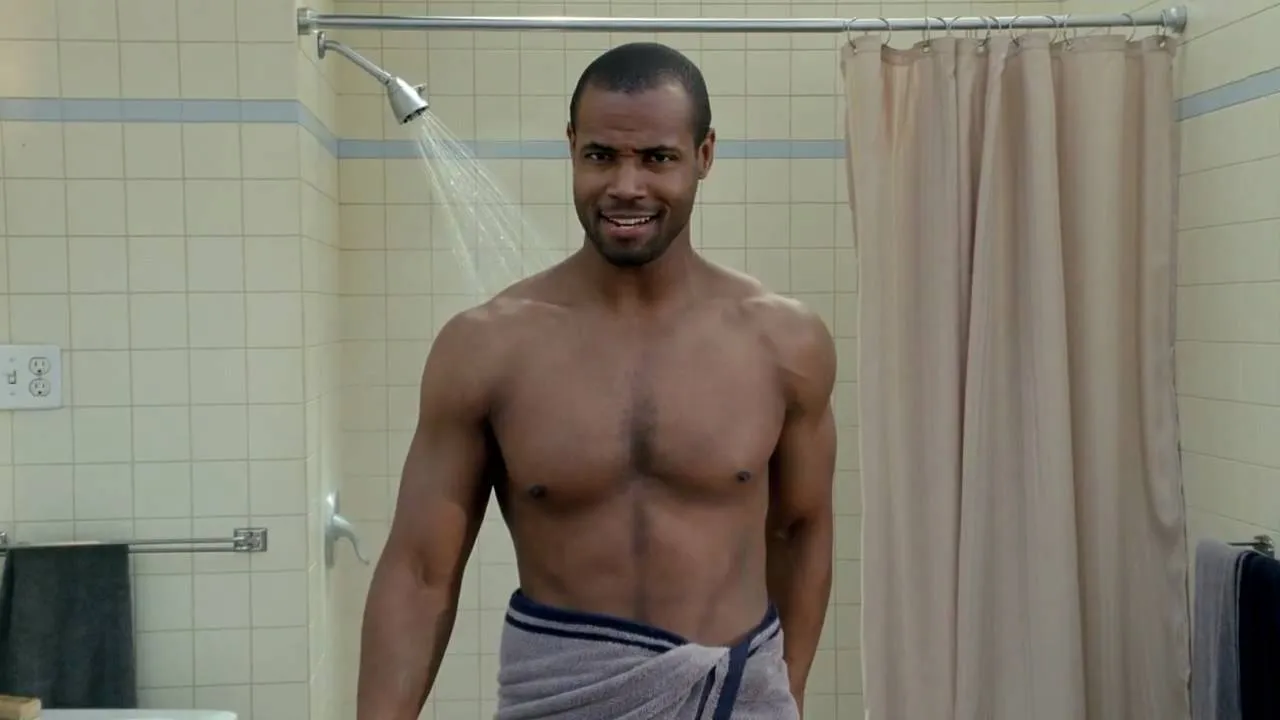
Old Spice. Craft, not vibes. Tight writing, surreal one-takes, then the Responses sprint. Humour as a skill you iterate.
Rule 1: Be specific
Specificity is the whole trick, and it’s the part brands skip.
Vague humour is dead on arrival. “Mondays, am I right?” is not a joke, it’s a shrug with punctuation. Nobody feels seen by a sentiment that applies to everyone.
What works is the opposite. Take the thing everyone in your world says privately and nobody says publicly, and put it somewhere visible.
Every group of people has this thing. It’s the small gap between how the work gets described and how it actually gets done. Everyone on the inside knows it. Nobody brings it up in the meeting.
The moment you say it out loud, you’ve done two things at once. You’ve proven you’re inside the room, and you’ve given your audience permission to admit they knew too.
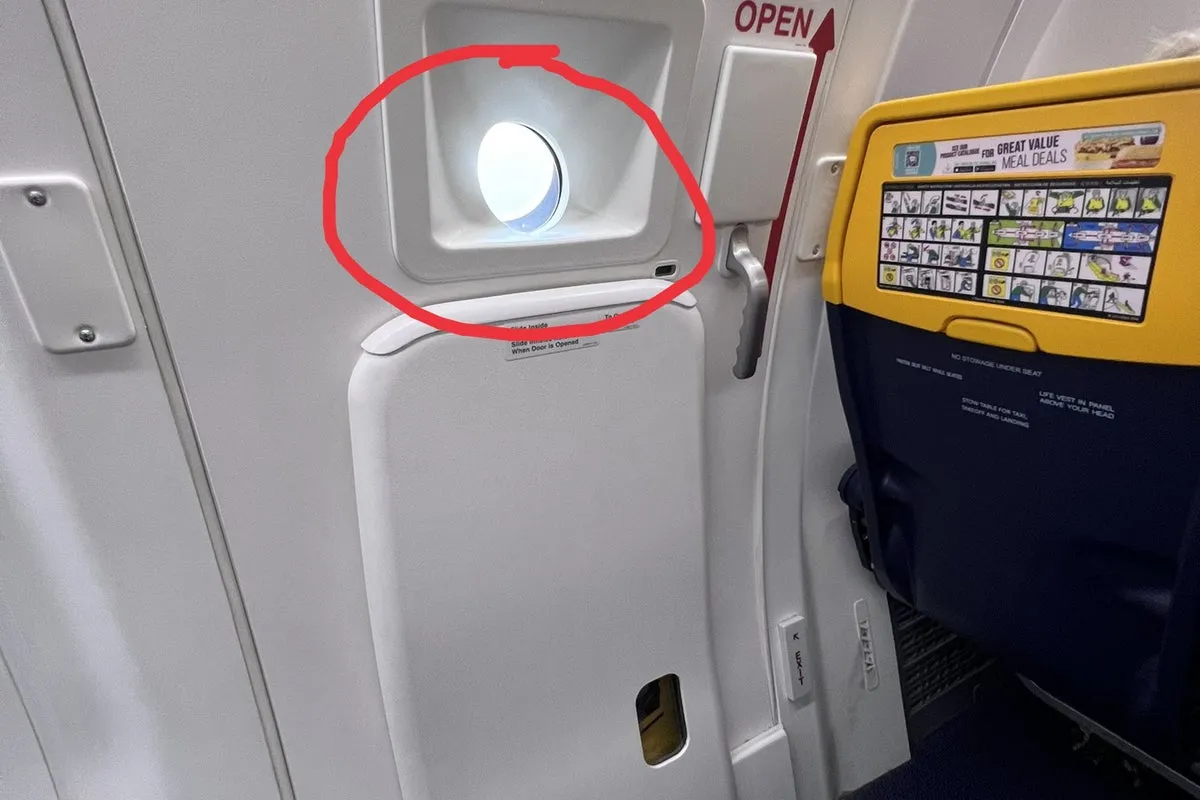
Ryanair. Paid for a window. Got a wall with a screw-sized hole. Only funny if you’ve sat there.
Rule 2: Be surprising
Humour runs on broken expectations. Which means the better you know your audience, the more ammunition you have, because you know exactly what they’re braced for.
The structure I keep coming back to is format, idea, twist. Borrow a shape people already recognise, pour your own reality into it, then flip it somewhere they won’t see coming.
Memes are the purest version of this. Take one everyone knows, ask what happens if the joke gets reversed, and apply it to your specific world. Re-skinning beats copying, both ethically and practically. A copied meme is a meme everyone has already seen. A re-skinned one is yours.
The tell that this is working is that you can deliver it completely deadpan. The second you wink at the reader and signal that a joke is coming, you’ve spent the surprise before it lands. Let them catch it themselves. That half-second of “wait, is this serious?” is the whole payoff.

Wendy’s. Four words. No setup wink. Competitor asset flipped into the punchline.
Where it goes wrong
Most advice on this topic tells you to avoid humour in serious industries. I think that’s backwards. The subject matter is almost never the reason it fails.
The real failure modes are different.
Sensitive territory. Religion, politics, someone’s identity. Leave it alone. You are not a stand-up comic with a room full of people who chose to be there.
Punching down. A small challenger taking a swing at a market leader is fine, even expected. The same swing from the incumbent is a bad look. Direction matters more than content.
Trying to be funny everywhere. This is the one I’d flag hardest. If you force it, people can feel it. Every surface does not need a joke. The brands that do this well are funny in a few places and normal everywhere else.
Starting with the big swing. If your company isn’t known for this, don’t open with a flagship campaign. Test on surfaces where you get feedback fast. Learning that a joke doesn’t land in a series of posts is survivable. Learning it in a Super Bowl ad is not.
Being random. A joke that doesn’t connect to anything is just noise with a punchline. Humour should reinforce what you already are, not announce a personality you’ve never had.
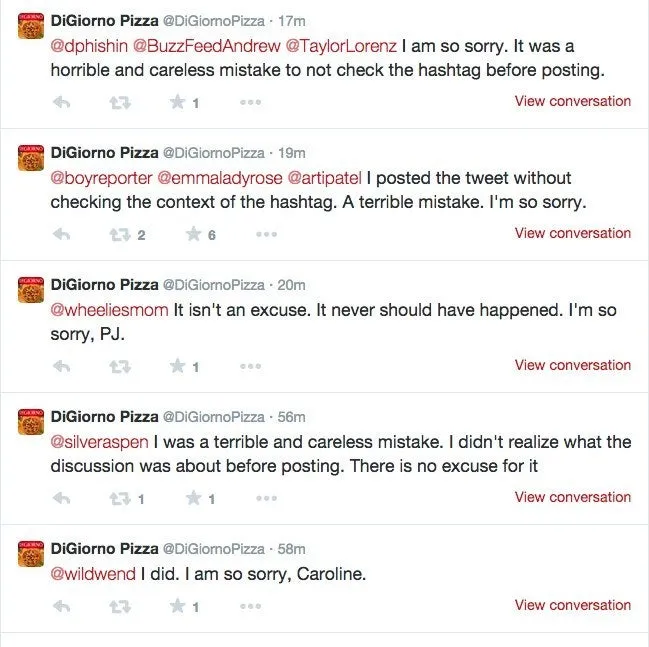
DiGiorno #WhyIStayed (2014). Tried to be funny in a trending hashtag without checking the room. Survivors were talking about domestic violence. This is the aftermath.
Where it actually pays off
The surfaces where humour earns its keep tend to share one quality: people arrive there with low expectations.
Social is the obvious one, and the highest leverage, because you can test so many things so quickly. If your main account is too buttoned up to risk it, spin up a separate page and let it be the experiment.
But the boring surfaces are where the real opportunity sits. Nobody expects your 404 page to be good. Nobody expects your careers page, or your release notes, or your shipping updates to have a voice. Those are the places where a small amount of personality does a disproportionate amount of work, because the baseline is so low.
Meanwhile, a billboard that makes 200 people feel like insiders can travel further than a campaign aimed at everyone. The narrower the joke, the further it goes when it lands.
Match the surface to the goal. Humour in a support flow reduces friction. Humour in an ad differentiates. Humour in a 404 recovers a session that was already lost. Same tool, different job.
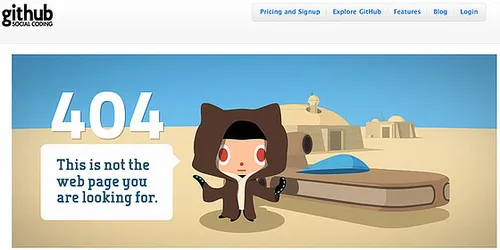
GitHub 404. Nobody expects a missing page to have a voice. Developers get an insider Star Wars nod instead of corporate “Oops!”
How to start this week
You don’t need a strategy deck. You need one small attempt and a willingness to be told it didn’t work.
Know your audience properly. Not the persona document. The actual texture of their week. What annoys them, what they complain about privately, what they’re tired of explaining to people outside the group.
Find the common ground. Where do you and they overlap for real? If you’re faking the overlap, it shows immediately. The best material comes from problems you both have.
Give the joke a job. Decide what it’s for before you write it. Building connection, removing friction, and getting attention are three different goals that want three different jokes.
Start small. Not because small is safe, but because small is where you learn. A post that flops costs you nothing and teaches you something real.
Keep it simple. Talk the way people actually talk. The moment you reach for corporate language, you’ve left the room and gone back to standing outside it.
Keep going. The first attempt probably won’t land. Neither will the second. Comedians develop thick skin for exactly this reason, and so should you. Just don’t repeat the same joke in the same shape and expect a different result.
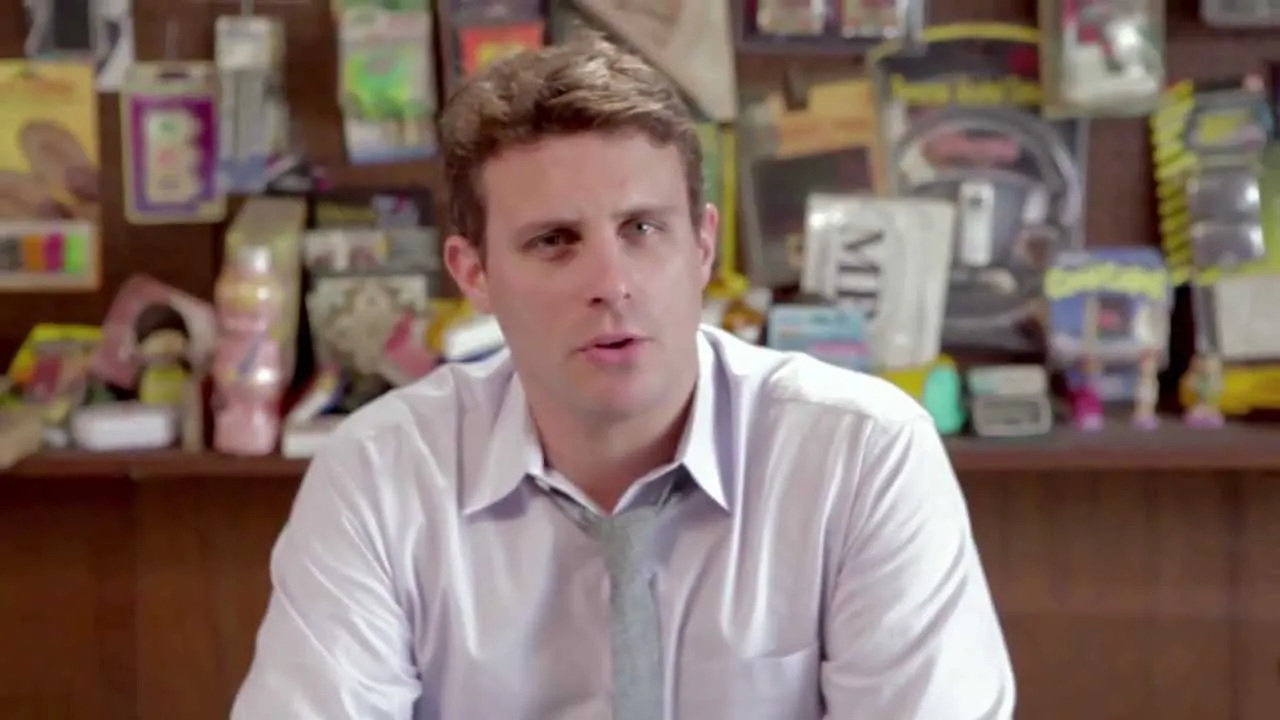
Dollar Shave Club launch. Cheap shoot. Sharp script. Posted as an experiment, not a flagship.
Nail it before you scale it
This is the part people rush, and it’s the part that separates a lucky post from a channel that works.
Once something gets a genuine reaction, that’s when you build structure around it. Not before. Four things are worth standardising, and only four:
Topics. The handful of recurring themes your audience has strong feelings about. Small list, revisited often.
Formats. Repeatable shapes. A first-person story, a screenshot with a caption, one specific meme layout. Condition your audience to recognise them on sight.
Voice. Two or three adjectives, hit every time. Dry, absurdist, deadpan, whatever fits. Pick them and stay inside them.
Rules. The always and nevers that become your fingerprint. Always real numbers. Always end on a one-liner. Never explain the joke. The specific rules matter less than the consistency.
The order matters here. Structure applied too early kills the thing before it can develop. You need a few real wins first, and you need the flexibility to take advantage of whatever’s happening that week. Lock it down once you know what you’ve got, not before.
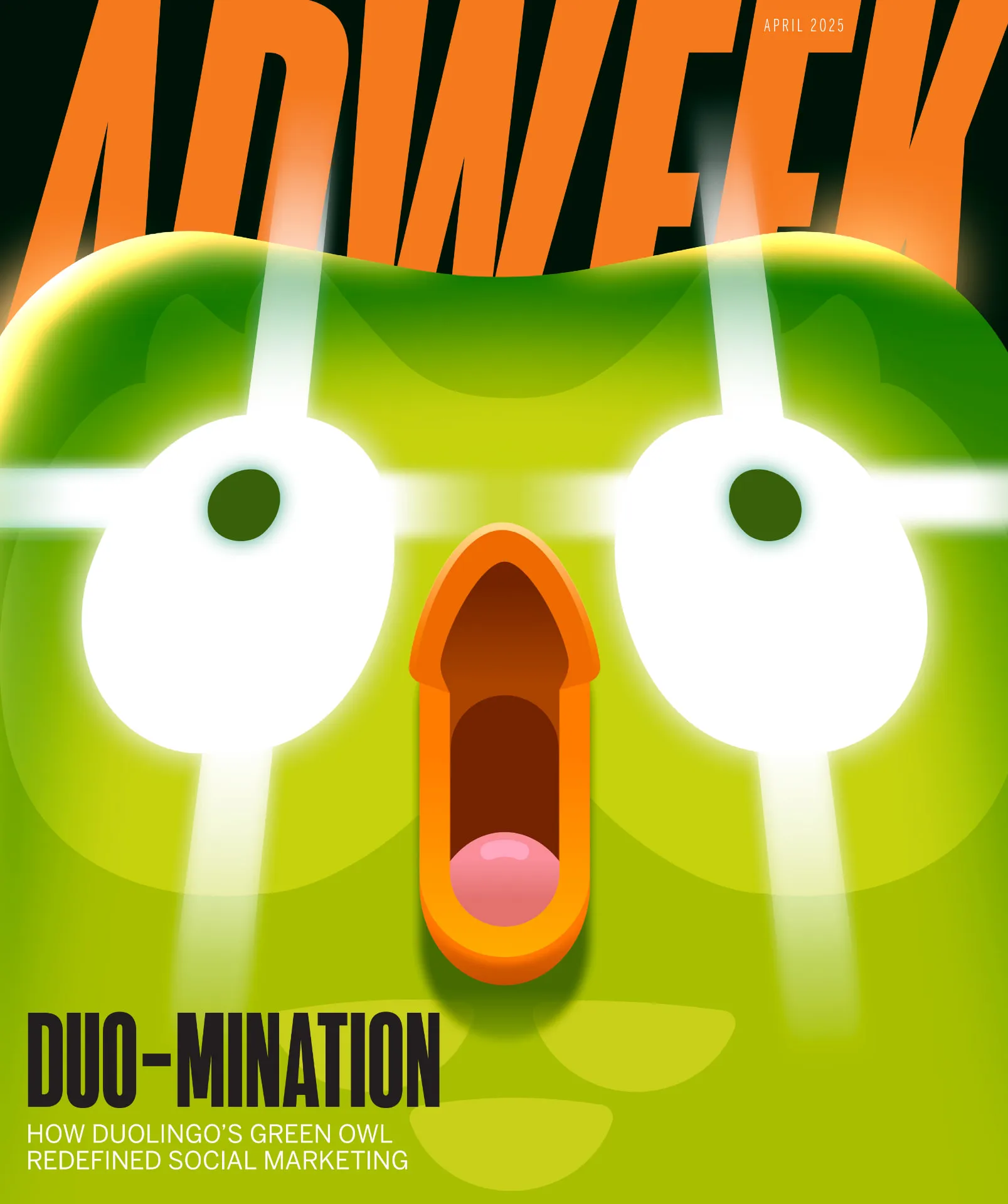
Duolingo. Once the chaotic owl worked, they turned it into a recurring system. Structure after wins.
The uncomfortable part
Here’s what I keep coming back to.
Every group of people has a truth that everyone knows and nobody writes down. It’s usually the funniest thing about the work, and it’s almost always the thing companies are most afraid to say.
That fear is understandable. But the brands that stay silent aren’t being careful. They’re just standing outside the room, guessing at what it’s like in there.
If you’re waiting to become a naturally funny person before you try this, you’ll be waiting forever. I know, because I spent years waiting.
Start with one thing. The one sentence everyone around you says to each other and never says in public.
You already know what it is.

Oatly. The industry truth said out loud. Deadpan, specific, hard to un-hear.